

You've noticed it. Maybe at your grandmother's house, or visiting a relative in assisted living, or — uncomfortably — on a coat in your own closet. A faint, persistent odor that isn't dirty, exactly. Not sweat. Not perfume gone stale. Something musty, slightly greasy, a little like old books or cardboard left in a damp basement.

The Japanese have a name for it: kareishu, often translated as "aging smell" or "old person smell." For decades it was dismissed as poor hygiene or an unkind myth about the elderly. But in 2001, researchers at Shiseido, the venerable Japanese cosmetics company, identified the actual culprit. It's a single chemical compound called 2-nonenal, and understanding it changes everything about how we think about this particular signature of aging.
The Chemistry
2-nonenal is what chemists call an unsaturated aldehyde, with the formula C₉H₁₆O. Its name comes from its nine-carbon chain and the position of its key double bond. In small concentrations, it's part of the natural scent of cucumbers, certain mushrooms, and aged beer. In larger concentrations on aging skin, it produces the characteristic kareishu note that's variously described as greasy, grassy, fatty, or musty.
So where does it come from? Your skin produces oils — sebum — that contain omega-7 fatty acids, particularly palmitoleic acid. When these fats oxidize through lipid peroxidation, one of the breakdown products is 2-nonenal. Younger skin produces less of these specific omega-7s and, more importantly, runs a robust antioxidant defense that keeps oxidation in check. As we age — typically beginning around 40 — three things shift at once. Hormonal changes alter the composition of skin lipids. Antioxidant capacity declines. And skin cell turnover slows, leaving more substrate sitting on the surface longer. The result: more 2-nonenal, accumulating where it didn't accumulate before.
This is what makes the smell so persistent. 2-nonenal is lipid-soluble. It embeds in skin oils, fabrics, upholstery, paper. Regular soap and water are designed to lift water-soluble compounds — sweat, salt, water-based grime. They don't fully address oil-soluble molecules that have integrated themselves into the lipid layer of your skin, much less the fabric of your favorite chair. Wash your shirt; the smell often comes back. Take a shower; it returns within hours. This isn't hygiene failure. It's chemistry.
A Japanese countermeasure
The Japanese, who tend to take aging smell more seriously than Western cultures, have developed an interesting solution: persimmon soap. The Japanese persimmon (kaki) is rich in tannins — a class of polyphenolic compounds with astringent properties. Tannins have an unusual molecular feature: they bind very effectively to aldehyde groups, the chemical signature at one end of 2-nonenal. When persimmon-derived tannins contact 2-nonenal on the skin, they neutralize it directly, breaking down the odor molecule rather than just covering it up. Some brand studies claim up to 97% better removal than standard soap — under controlled conditions and admittedly with motivated researchers — but the underlying chemistry is sound, and anecdotal results among persimmon soap users are striking.
A medical aside
A quick aside that medical curiosity demands: those same persimmon tannins, when consumed in concentrated form, have an interesting and slightly alarming property. They can polymerize in the acidic environment of the stomach, forming a sticky mass called a diospyrobezoar — a kind of phytobezoar, or "stomach stone," specifically from persimmon. Eating unripe persimmons in quantity, particularly on an empty stomach, can produce a wad of these tannins that balls up into something that occasionally requires endoscopic or even surgical removal. It's not common, but it's well documented in gastroenterology literature.
The lesson is a small object lesson in context-dependent chemistry: the same tannic property that effectively binds aldehydes on your skin can, under different conditions, form chewing-gum-like aggregates inside you. Ripe persimmons are far less problematic — the astringency mellows as the fruit ripens — but it's a reminder that nature's tools serve different purposes in different contexts. Use persimmons externally with enthusiasm. Eat them ripe.
What else helps
Beyond persimmon soap, there are lifestyle approaches that target the upstream source of 2-nonenal: oxidation itself. A diet rich in antioxidants — colorful vegetables, berries, green tea, nuts, fatty fish — supplies the substrate your body uses to manage oxidative stress throughout your skin. Hydration keeps cell turnover and barrier function working properly. Good skin care matters less for its perfumed properties than for keeping the lipid environment healthy and turnover regular. These changes don't eliminate 2-nonenal — biology will — but they can meaningfully reduce its production at the source.
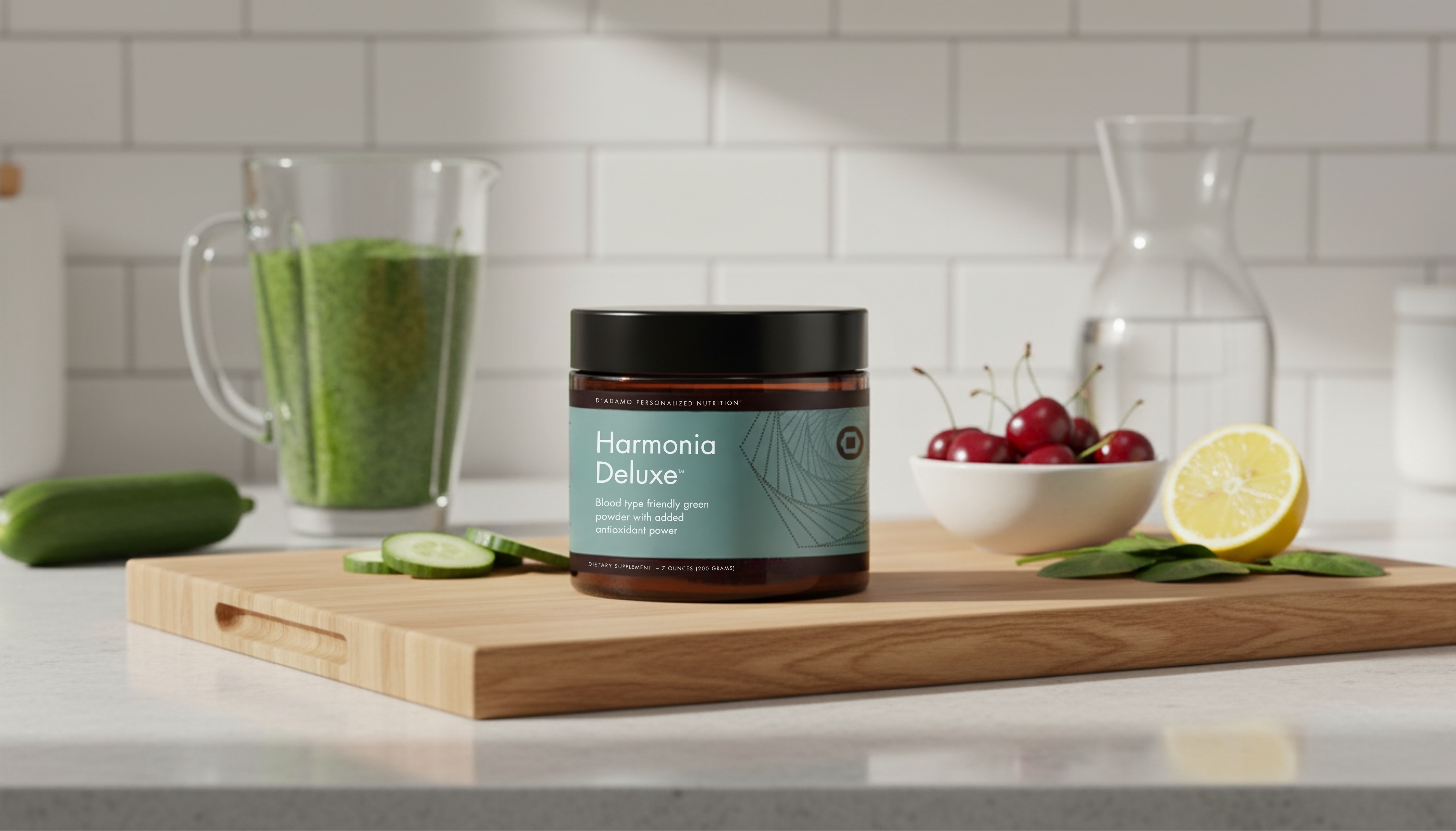
(Organic Barley Grass, Chlorella Algae, Montmorency Tart Cherry Fruit)
All-natural, plant-based supplement drink mix bursting with antioxidant-rich nutrition that supports digestion, metabolic balance, and natural detoxification by processing and eliminating toxins.
The takeaway
If you've noticed kareishu in yourself or a loved one, the takeaway isn't that you need to be embarrassed. This is normal physiology, signal of nothing but the passage of time. But it's also not a phenomenon you simply have to accept. Switch the soap to a persimmon-based formulation. Wash your linens and clothes more often, with detergents that don't try to mask odors but to neutralize them. Layer in dietary antioxidants. The smell of aging, like aging itself, is something biology gave us tools to manage — if we understand what we're managing.
