

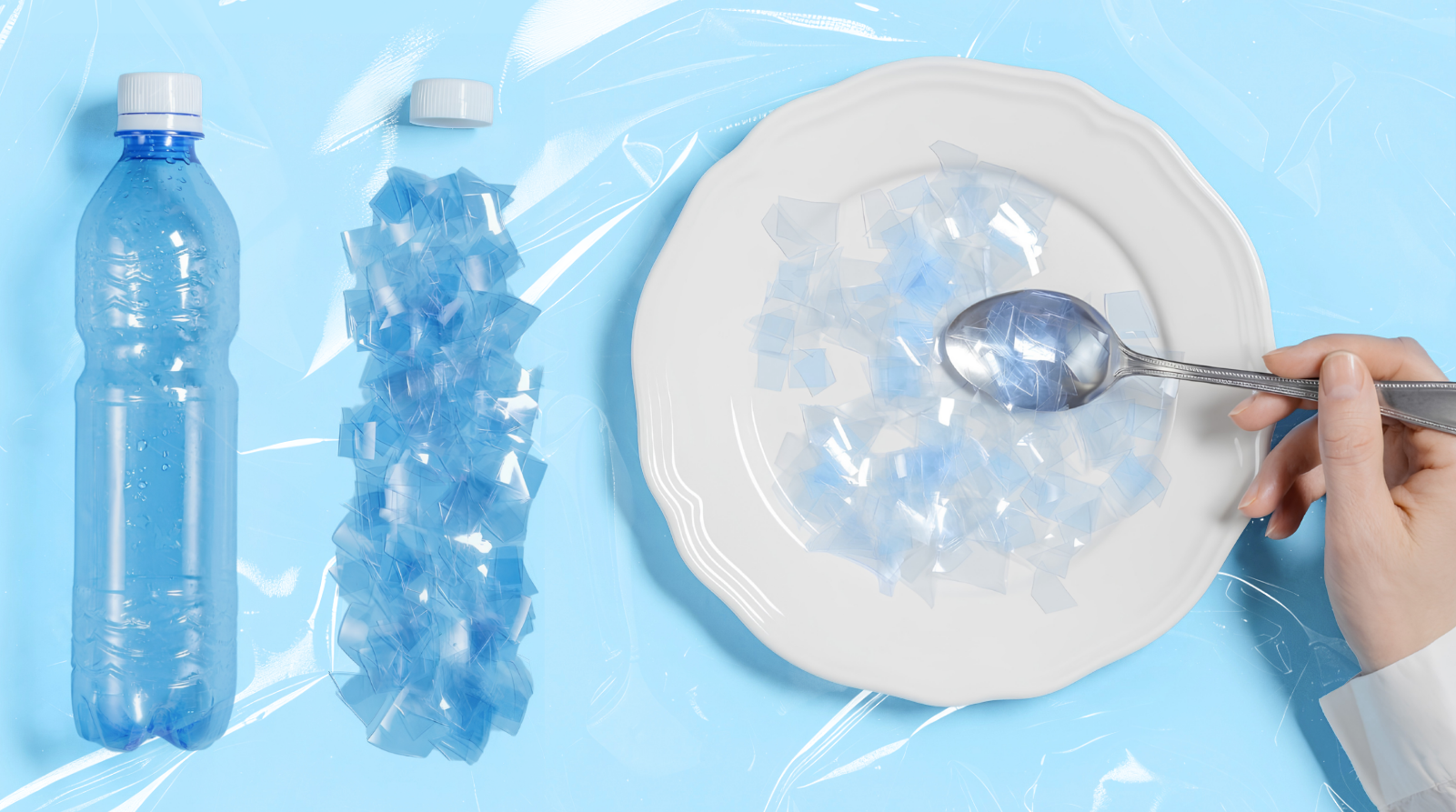
If you have been paying attention to environmental health news over the past few years, you have probably heard that microplastics are showing up in human tissue. What you may not have heard is just how widespread the accumulation is, or what the current science says to do about it. The short answer is that the situation is real, somewhat alarming, and considerably more nuanced than the headlines suggest.
What Are We Actually Talking About?
Microplastics are plastic particles smaller than 5 millimeters. The ones generating the most biological concern are nanoplastics, those under 1 micrometer, small enough to cross cell membranes and the blood-brain barrier. These particles enter the body through food and water, through the air we breathe (particularly indoors, where synthetic textiles and household dust contribute significantly), and potentially through the skin.
Contrary to the viral ‘credit card per week’ claim that circulated a few years ago, that figure has been thoroughly debunked. Current estimates place realistic intake at around 4 micrograms per week, with partial excretion. That is still not zero, and it adds up over a lifetime. Extrapolations from organ data suggest that by age 80, total body accumulation could approach roughly 0.92 grams. Milligram-scale numbers sound small until you consider where that material is concentrated.
Where They Accumulate
This is where the picture gets genuinely concerning. Microplastics are not distributed evenly throughout the body. They are found in virtually every organ examined, but some tissues accumulate them at dramatically higher levels than others.
The liver and kidneys both show median concentrations around 400 to 433 micrograms per gram of tissue in recent 2024 and 2025 data. The colon has among the highest particle counts of any organ, around 28 particles per gram in some measurements, which makes sense given that ingestion is a primary exposure route, and the intestinal lining is where a lot of the initial absorption or non-absorption happens. The total estimated intestinal burden can be as high as 4.71 milligrams.
The lung picture reflects the inhalation pathway, with bronchoalveolar lavage samples showing up to roughly 9 million particles per 100 milliliters of fluid. Total lung burden, by some estimates, reaches approximately 46 milligrams, making it potentially one of the largest repositories in the body.
Then there is the brain. This is the finding that has gotten researchers most animated. Brain tissue, particularly the frontal cortex, shows accumulation levels that are often 7 to 30 times higher than those in the liver or the kidneys. Recent data puts median brain concentrations in some studies at 4,000 to 5,000 micrograms per gram, representing roughly a 50 percent increase over 2016 figures. In some studies of people with dementia, levels have been reported up to 6 times higher than in age-matched controls without the condition. The predominant polymer identified in brain tissue is polyethylene, accounting for about 75 percent of what is found there. The causal relationship between microplastic accumulation and neurological disease has not been established, but the correlation is striking enough to have become a serious research priority.
Reproductive tissue is not spared from microplastics, either: Some studies have reported concentrations of around 299 micrograms per gram in testes, while placental tissue was found to contain approximately 63 micrograms per gram. This may indicate that exposure begins before birth.
How the Body Tries to Deal With Them
Here is the important context: most ingested microplastics, particularly the larger particles, 150 to 200 micrometers or larger, pass through the gastrointestinal tract without being absorbed and are eliminated in stool. The gut is fairly good at excluding bulk material. The problem is the smaller end of the size distribution. Nanoplastics and very small microplastics can be absorbed through the intestinal lining, enter systemic circulation, and translocate to tissues and organs. Once in tissue, evidence suggests they are retained rather than cleared, which is why we see accumulation increasing with age.
The kidneys can excrete some smaller particles and polymer degradation products, but this appears to be a minor pathway. The glomerular filter in the kidney effectively blocks larger particles from passing through. Sweat, saliva, tears, and breast milk can carry trace amounts, but none of these routes constitutes meaningful elimination. In the lungs, the ciliary clearance system, the wave of mucus and tiny hair-like structures lining the airways, works to move inhaled particles up and out through coughing and swallowing. This system is efficient for many inhaled particles, but it is not designed for the nanoscale.
The honest summary is that elimination of microplastics is partial and inefficient, especially for the particles small enough to have penetrated tissue in the first place.
What to Actually Do About It
Reducing ongoing exposure is one practical lever available. The major sources worth addressing are food packaging (particularly heating food in plastic containers), plastic water bottles, heavily processed foods that have passed through plastic-heavy industrial systems, synthetic textiles (a major source of airborne fibers), and indoor air quality generally. HEPA air filtration, drinking from glass or stainless steel, and avoiding plastic food contact at high temperatures are practical starting points.
From a biological support standpoint, the liver is the primary processing organ for whatever the body can mobilize and eliminate. Supporting normal detoxification pathways with antioxidant nutrients makes sense given what we know about how the liver handles foreign substances. Whether these strategies meaningfully influence microplastic clearance has not been studied directly, but optimizing liver function is a reasonable hedge.
Because no supplement can reverse microplastic accumulation, the most impactful levers remain reducing ongoing exposure and supporting overall nutrition. Harmonia Deluxe™ was formulated with that general wellness goal in mind. Made with organic barley grass, chlorella algae, Montmorency tart cherry, and other plant-based ingredients, it is a daily drink mix built around chlorophyll-rich greens and antioxidant-dense fruit, designed to support digestion, metabolic balance, and the body’s natural detoxification processes. To be clear, it is not a microplastics treatment, and no supplement can currently claim to remove them from tissue. As part of a broader strategy, reducing exposure and giving the liver nutritional support, a formula like this is a reasonable way to cover that nutritional base.
Chlorophyll’s role in gut health is an area of ongoing scientific interest — some early research suggests it may interact with microplastic fragments in the digestive tract — though no study has evaluated this effect in humans, and Harmonia Deluxe™ is not intended or tested for that specific purpose.
There is also early research on probiotics, including a 2025 mouse study in Frontiers in Microbiology, observing that specific probiotic strains were associated with increased microplastic excretion and reduced residual gut particles in mice. Human trials have not yet confirmed these findings.
The research is moving fast. The brain accumulation data is an active area of ongoing study. We are the first generation to have spent an entire lifetime inside a plastic-saturated environment, and the long-term biological consequences of that are still being written.

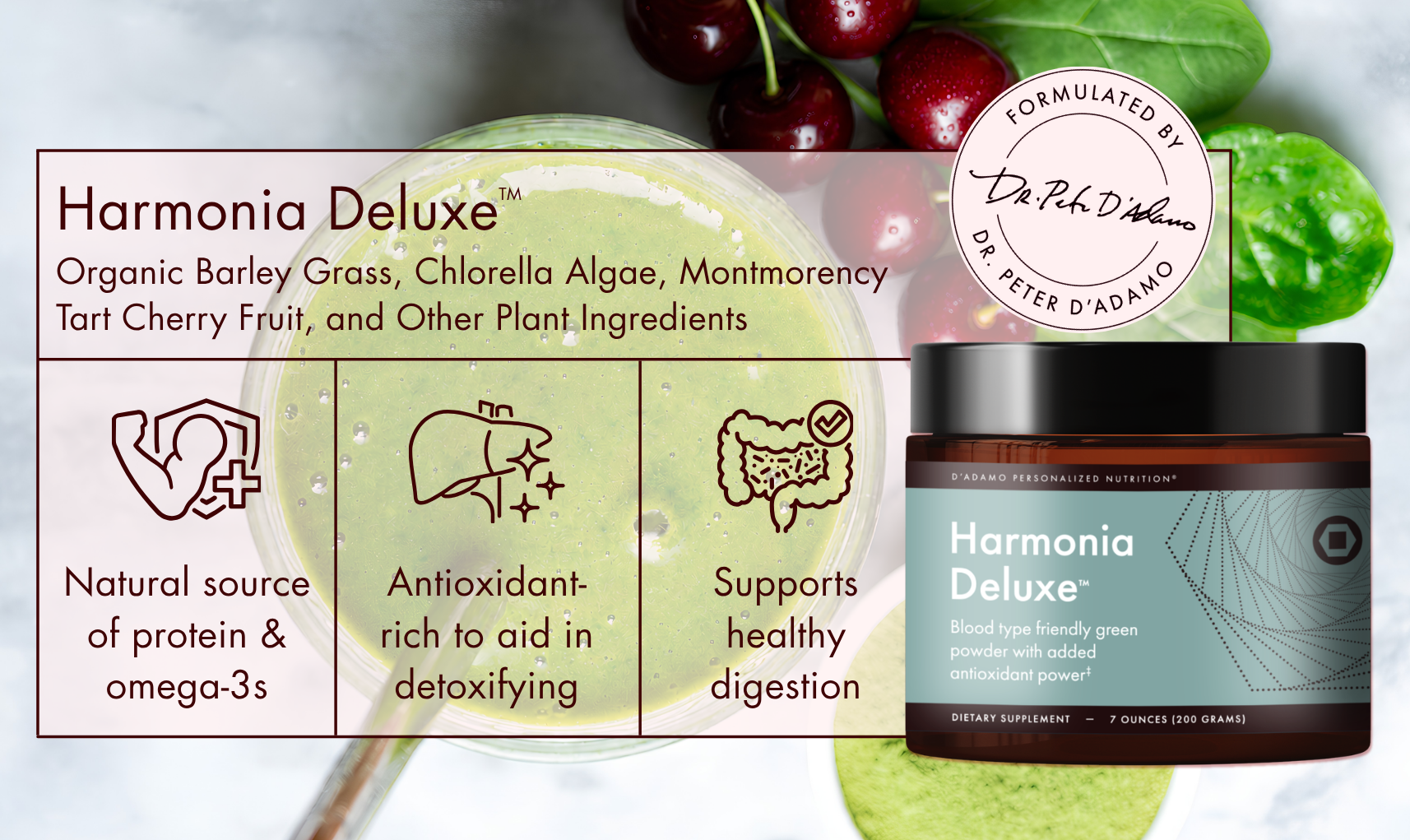
Explore Harmonia Deluxe™
(Organic Barley Grass, Chlorella Algae, Montmorency Tart Cherry Fruit, and Other Plant Ingredients)
All-natural, plant-based supplement drink mix bursting with antioxidant-rich nutrition to support digestion, metabolic balance, and natural detoxification processes.
These statements have not been evaluated by the Food and Drug Administration. Our products and services are not intended to diagnose, treat, cure, or prevent any disease.