

Breathwork is the conscious control of your breathing pattern (pace, depth, and rhythm) to create specific physiological and psychological effects.
Let's explore the major forms of breathwork:
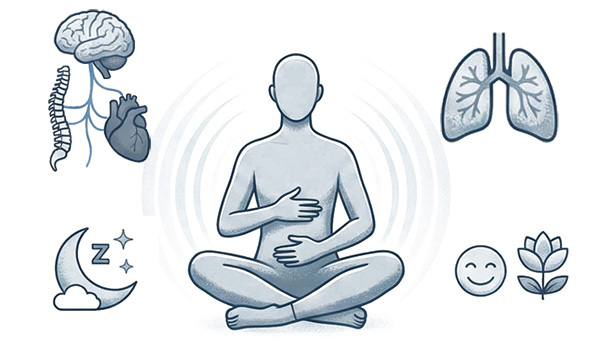
Belly Breathing: This is the foundation of almost all breathwork. You breathe deeply into your belly instead of your chest, which fully engages the diaphragm. To practice: Sit or lie down comfortably, place one hand on your belly, inhale slowly through the nose for 4–6 seconds so your belly rises, then exhale gently through the mouth for 5–8 seconds. It’s excellent for activating the relaxation response, lowering stress, and improving oxygen delivery. Most people notice an immediate sense of calm.
Box Breathing: Favored by Navy SEALs and high-performers, this technique builds focus and emotional control. Inhale for 4 seconds, hold the breath for 4 seconds, exhale for 4 seconds, and hold again for 4 seconds. Repeat for 4–8 rounds. It’s particularly useful before stressful situations, public speaking, or when you need to reset your mind quickly. Many people find it sharpens concentration and reduces anxiety in under two minutes.
4-7-8 Breathing: This is one of the best techniques for falling asleep and managing acute anxiety. Inhale quietly through the nose for 4 seconds, hold the breath for 7 seconds, and exhale completely through the mouth (making a “whoosh” sound) for 8 seconds. It’s powerful for calming the nervous system and is often recommended for insomnia or racing thoughts at bedtime.
Alternate Nostril Breathing: This balances the left and right hemispheres of the brain. Close the right nostril with your thumb, inhale through the left nostril, then close the left nostril and exhale through the right. Inhale through the right, switch, and continue. It’s soothing for the mind, helps with focus during meditation, and is believed to balance energy. Great for a midday reset or when feeling mentally scattered.
Coherent Breathing: This involves breathing at a steady rate of about 5–6 breaths per minute (roughly 5 seconds inhale and 5 seconds exhale). It’s one of the most researched techniques for heart rate variability and is known to improve emotional resilience, lower blood pressure, and create a state of calm alertness. Many people use it during meditation or as a daily practice.
Wim Hof Method (Power Breathing): This more intense approach involves 30–40 deep, fast breaths followed by a breath hold. It increases energy, alkalizes the body, and has been studied for its effects on the immune system and inflammation.

(Quercetin Plus, Proberry Caps, Collinsonia Plus Bundle)
Sometimes, when beginning a new lifestyle habit, you need a bit of help. This synergistic trio of powerful formulas is designed to support respiratory health while providing substantial savings compared to individual pricing.
Let's look at some of the researched benefits of breathwork:
-
- Rapid Stress & Anxiety Reduction: Breathwork is one of the fastest ways to activate your parasympathetic nervous system (“rest and digest”). Slow, deep breathing lowers cortisol levels and can reduce anxiety within minutes.
- Better Emotional Regulation: Many people report feeling calmer, less reactive, and more emotionally balanced. Regular practice helps interrupt panic cycles and improves mood.
- Improved Focus & Mental Clarity: Techniques like box breathing (used by Navy SEALs) sharpen concentration and reset your mind during high-pressure moments.
- Deeper Sleep: Practicing breathwork before bed (especially slow breathing or 4-7-8) helps you fall asleep faster and improves sleep quality.
- Lower Blood Pressure & Heart Health Support: Consistent breathwork has been shown in multiple studies to reduce blood pressure and resting heart rate.
- Increased Energy & Reduced Fatigue: Certain styles (like Wim Hof or fast-paced breathing) boost oxygen delivery and energy levels naturally, often replacing the need for caffeine.
- Pain Management: Breathwork can lower perceived pain intensity and is used in childbirth, surgery recovery, and chronic pain management.
- Lung Function & Respiratory Health: Breathwork strengthens the diaphragm, increases lung capacity, and improves overall oxygenation.
On average, a healthy adult breathes about 20,000 to 22,000 times per day. Breathwork enthusiasts often point out this number to highlight how small, intentional changes to our breathing (even just a few minutes a day) can have a meaningful impact on our overall health, since breathing is the most repeated thing we do.