


Every morning, as your eyes flutter open, your body unleashes a powerful surge of cortisol—the stress hormone—in what’s known as the cortisol awakening response (CAR).
In healthy amounts, it acts like a biological orchestra conductor—keeping systems in harmony and preparing you to handle daily demands. Released in a distinct daily rhythm, cortisol naturally surges within the first 30–45 minutes after waking (the Cortisol Awakening Response or CAR), providing alertness and energy to start the day.
Levels then gradually decline toward evening, reaching their lowest point at night to allow rest and repair. Chronic stress, poor sleep, or irregular routines can keep cortisol elevated, contributing to anxiety, brain fog, abdominal weight gain, weakened immunity, and disrupted sleep. Balanced cortisol supports focus and resilience; dysregulated levels turn a helpful signal into a source of long-term wear and tear.
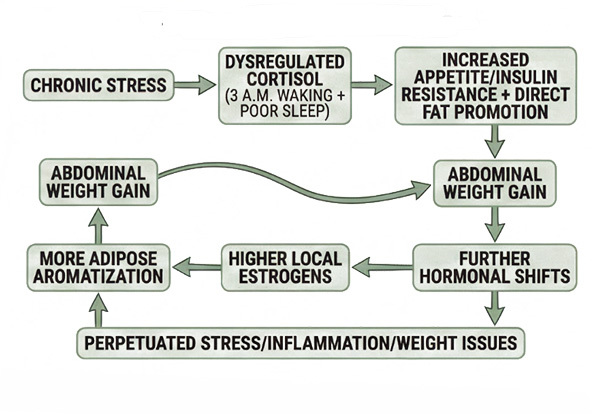
The Cortisol AM Cycle
Normal cortisol rhythm follows a circadian pattern: Levels are lowest around midnight to ~3 a.m. (nadir), then gradually rise starting ~2-3 a.m. to prepare for waking (cortisol awakening response peaks ~30-60 minutes after rising, around 8 a.m.).
In chronic stress, HPA axis dysregulation (hypothalamic-pituitary-adrenal) disrupts this: cortisol can spike prematurely or stay elevated at night, causing abrupt awakenings around 3 a.m. (often with racing thoughts, anxiety, or feeling 'wired.') Estrogen influences cortisol, converting cortisone to active cortisol in fat tissue, amplifying fat storage and inflammation.
Simple Lifestyle Habits to Modulate Morning Cortisol
Here’s a practical, evidence-based morning routine to help tame the stress-cortisol morning loop: The goal isn’t to eliminate cortisol (you need some for energy and focus) but to prevent excessive spikes and promote a healthy daily rhythm.
- Wake up at a consistent time (even on weekends). A regular schedule supports your circadian rhythm and prevents erratic cortisol patterns. Aim for 7–9 hours of sleep nightly.
- Hydrate first (16–32 oz water). Drink a big glass of water (add electrolytes if needed) right after waking. Dehydration stresses the body and can increase cortisol levels.
- Get natural morning light (10–20+ minutes). Step outside or sit by a bright window within the first hour. This regulates your circadian rhythm, supports a healthy cortisol curve (higher in the AM, lower in the PM), and improves energy and sleep. Skip sunglasses for the best effect.
- Avoid your phone & news for the first 30–60 minutes. Scrolling, emails, or notifications trigger an immediate stress response. Use a traditional alarm clock instead.
- Gentle movement: yoga, stretching, or a light walk. 10–30 minutes of mindful movement (yoga, tai chi, or a calm stroll) helps regulate cortisol without over-stressing the system. This is especially helpful for type A, as they often take longer to clear elevated cortisol levels.
- Eat a protein-rich breakfast (within 30–60 minutes of waking). Eggs, Greek yogurt, protein smoothie, lean meats correct for your type, and oats with nuts/seeds. This stabilizes blood sugar and prevents cortisol spikes from low glucose. Delay coffee until after eating (ideally 60–90 minutes after waking).
I've had great success using these two products in tandem to help patients gain control of their morning cortisol spikes:
Cortiguard®: This well-loved formula contains Boerhavia diffusa, a well-known Ayurvedic herb that acts as a gentle cortisol regulator, helping to blunt morning or chronic stress spikes without sedative effects. This amazing herb demonstrates bi-directionality: it can help restore depleted cortisol levels in cases of adrenal exhaustion.
Intrinsa™: The butyrate in this formula offers several promising benefits for cortisol management, primarily through its effects on the gut-brain axis, inflammation, and the HPA axis (hypothalamic-pituitary-adrenal stress axis).