
The great thing about realistic exercise goals is that your level of fitness is progressive: The more you do, the more you can do.
Maimonides, the great Jewish physician and teacher, wrote, "As long as a person exercises and exerts himself…sickness does not befall him and his strength increases…. But one who is idle and does not exercise…even if he eats healthy foods and maintains healthy habits, all his days will be of ailment and his strength will diminish."
Gifted as we are with this great knowledge about individuality, we also benefit from knowing that the best forms of exercise for our blood types or GenoTypes is that which directly influences our stress chemistries or disease susceptibilities for the better. For example, type O’s who do vigorous exercises have a better chance of raising their dopamine levels and eliminating excess adrenaline, two problem areas that probably link directly back to their type O genetics. Type A’s who do Tai Chi or Yoga-type stretching may actually help reverse tendencies towards artery inflammation, which are due to their having higher blood viscosity (thickness).
After a long career in martial arts, I’ve lately been enjoying road cycling. It’s somewhat meditative since a lot of the time I’m just cycling down the road, alone with my thoughts. In poor weather, I enjoy yoga and Tai Chi. However, just having turned 52, I can tell that things are changing with my body. The strength is still there, but the recovery and endurance need to be better supported now than when I was in my twenties and could play two back-to-back games of full court basketball in 90-degree weather! I’m also stiffer the next day, and need to take extra time to stretch to help prevent injuries.
So when we got around to deciding what focus this month’s newsletter should have, the subject of improving exercise recovery and endurance was right at the top of the list. I’ve asked my colleague Dr. Natalie Colicci to put pen to paper and give us her thoughts on improving various aspects of exercise performance. Natalie responded with a great little article on the lactate threshold and how to improve it with supplements. She’s also identified three basic NAP formulas that can help improve your athletic performance and decrease your chances of injury.
So don’t just stand there, do something! Proper diet is an important part of the spectrum. So is intelligent use of supplements in proper doses. However, neither will work to their optimum abilities unless you put the exercise factor to work in your life as well. You needn’t start out as the next Michael Phelps or Lance Armstrong. Just start out somewhere. The great thing about realistic exercise goals is that your level of fitness is progressive: The more you do, the more you can do. That’s why where you start is not important. In time your aerobic capacity, flexibility, strength and endurance will all improve and you will be able to do more. Plus you will handle stress more efficiently, have more energy, and feel and look better.
And don’t be surprised if you surprise yourself.
Enjoy, and see you next issue! - Peter
Taming The Burn: How to Improve Your Lactic Acid Threshold - Bromelain,
Connectivar, & Phloxicin
Natalie Colicci, ND
The key to increasing your lactic threshold (and thus increasing your exercise capability) lies in improving your body’s ability to oxidize lactic acid for energy production.
We’ve all had that feeling. The sensation that
our legs were on fire as we struggle to cycle to the top of a hill, or do those
last two crunches. You know, the feeling that makes you say, “Wow! I must
be out of shape!” or “I feel muscles hurt in places I didn’t
even know I had them!”
Congratulations! You’ve hit your lactic acid threshold.
In our cells there are two basic ways to make energy: aerobic (which
requires the presence of oxygen) and anaerobic (which doesn’t).
Most of the time we use the aerobic system, but when this system runs out of
oxygen, as what happens with more intense exercise, anaerobic energy mechanisms
kick in. The end product of anaerobic exercise is lactic acid. It was once believed
that lactic acid was the end of the energy story. However, new studies indicate
that lactic acid can be used to produce large amounts of glycogen, a substitute
for glucose, that can quickly fuel your muscles in the absence of glucose.
During low intensity exercise, the body is usually able to keep up with demands
for oxygen by the muscle cells. However, when there is an increase in demand,
the body quickly ramps up its ability to break down glucose for energy. This
metabolic overdrive causes an increase in a molecule called pyruvate. Under intense
physical demand, pyruvate can go either of two ways. It can it can be used for
extreme energy making right then and now, or it can be converted to lactic acid
and used later. You can only use so much pyruvate, and if the cells cannot can
not burn it fast enough, more pyruvate will wind up as lactic acid. You now have
an over abundance of lactic acid floating around.
This is the lactic acid threshold. You’re exercising beyond the capacity
of the muscle cells to keep up. The accumulation of lactic acid causes the acidity
in your muscle cells to rise which then leads to muscle fatigue.
The key to increasing your lactic threshold (and thus increasing your exercise
capability) lies in improving your body’s ability to oxidize lactic acid
for energy production.
So how do we do this? First, we need to provide our cells with enough oxygen
and the ability to use it. This increases the aerobic energy mechanisms and helps
to oxidize lactic acid. The best way to do this is of course to train and condition
your body by regular exercise. As you do this, your cells learn and become more
efficient at their jobs. However, through simple supplementation, you can support
your body’s effort to achieve a high lactic acid threshold faster.
Creatine: This supplement is neither
a mineral, vitamin nor herb, but rather an “organic acid.” When
creatine hits your muscle tissue it “buffers” the acidity
which leads to muscle fatigue. Creatine also decreases the formation of
lactic acid. In humans, approximately half of the stored creatine originates
from food (mainly from fresh meat), so the type O diet is usually creatine
rich. Plant based diets are usually low in creatine, so type A may want
to use a creatine supplement if they are planning to train hard. Type B
and AB can also benefit from creatine for reasons that are theirs alone:
Creatine provides a bit of “non-protein nitrogen” which types
B and AB can really benefit from.
Hydroxy-methyl-butyrate (HMB): helps
muscle cells burn fatty acids for energy, which decreases the lactic acid
threshold by reducing the requirement for carbohydrate sources of energy.
Foods high in HMB are:
Type A: Alfalfa Sprouts, Pineapple, Asparagus, Avocado,
Cauliflower, Grapefruit
Type AB: Alfalfa Sprouts, Pineapple, Asparagus,
Cauliflower, Catfish, Grapefruit
Type B: Red Meats, Asparagus, Cauliflower, Catfish,
Grapefruit
Type O: Red Meats, Asparagus, Grapefruit
Manganese: This essential mineral
has been well documented in its ability to oxidize lactic acid. A supplement
formula for maintaining healthy connective tissue (and a good source of
manganese) is Connectivar.
Vitamin C: One of the most potent
lactic acid oxidizers is Vitamin C. When it comes to supplementation with
Vitamin C, the best sources are food sources, such as the rose hips, acerola
cherry and elderberries found in Proberry
Caps .
If you plan on using these
supplements to help build your lactic acid threshold, they should be taken anywhere
from 30-60 minutes before you begin your workout.
Now next time you are out running, fast walking or cycling you can look confidently
at that hill on the horizon and whisper to yourself: ‘I can do that!”
Pineapple, Ananas comosus, has been used as a medicinal plant in several native
cultures and Bromelain has
been known chemically since 1876. Bromelain is
an enzyme found in the stem and fruit of the pineapple plant. It is best known
as a digestive aid and for its anti-inflammatory effects in traumatic injuries
and after surgery. Bromelain has
also been used successfully to treat a number of disorders including heart disease,
arthritis, upper respiratory tract infection, and Peyronie's disease (a condition
that affects the genito-urinary tract and can cause sexual dysfunction in men).
It has been used successfully to heal wounds caused by burns and to increase
the actions of antibiotics.
Bromelain's anti-inflammatory
activity appears to be due to a variety of physiological actions. Evidence indicates
that Bromelain inhibits
inflammation at the sites of injury and is known to digest blood clots. Perhaps
the strongest evidence of benefits of Bromelain enzyme
supplements come from numerous European studies showing various blends to be
effective in accelerating recovery from exercise and injury in sportsmen as well
as tissue repair in patients following surgery. In one study of soccer players
suffering from ankle injuries, Bromelain supplements
accelerated healing and got players back on the field about 50% faster than athletes
assigned to receive a placebo tablet. A handful of other small trials in athletes
have shown it can help reduce inflammation, speed healing of bruises and other
tissue injuries (including fractures) and reduce overall recovery time. In patients
recovering from facial and various reconstructive surgeries, treatment with Bromelain significantly
reduced swelling, bruising and stiffness.
Bromelain is
used by the physicians of The D’Adamo Clinic for the treatment of:
Traumatic Injuries and Surgical Recovery
Cardiovascular Disease
Joint Inflammation
Digestive Support
Anti-tumor Activity
Uhlig G, Seifert J. The effect of proteolytic enzymes
(traumanase) on posttraumatic edema. Fortschr Med. 1981;99:554–556.
Walker JA, Cerny FJ, Cotter JR, Burton HW. Attentuation
of contraction-induced skeletal muscle injury by Bromelain.
Med Sc Sports Exerc. 1992;24:20–25.
Connectivar is
designed to help maintain the delicate integrity of blood vessels and ligament
strength for men and women of all blood types. The ingredients in Connectivar were
specifically chosen for their ability to improve both joint strength and blood
circulation.
Manganese is an elemental mineral required to perform
various biochemical reactions in the body. It helps to strengthen tissues,
ligaments, and the linings of our organs. Bernard Jensen stated, "If
the human body is well supplied with manganese, various tissues, cells
and nerves become more ductile, tensile, and elastic." Specifically,
the reactions that make cartilage in the joints will not occur efficiently
unless manganese is present in the body. Supplementing manganese helps
ensure that cartilage synthesis in the joints occurs at the maximum possible
rate.
Unlike the arteries of the body which contract and
relax depending on the chemicals they are surrounded by fighting gravity,
veins depend on the integrity of the strength of their walls, their delicate
valves and the muscles around them to move blood along back up to the heart.
Butcher’s Broom Root extract has strengthening and protective effects
on veins, which helps reduce swelling and improve blood circulation. A
study conducted to compare Butcher’s Broom with placebo in treatment
of chronic venous insufficiency, a result of your veins being unable to
pump the blood back to your heart efficiently, showed significant results
in decreasing ankle and leg circumference, as well as decreases in subjective
symptoms such as heavy tired legs and sensation of tension and tingling.
Connectivar also
contains Rutin-Hesperidin Complex, which relieves occasional venous insufficiency,
including pain, heaviness, leg cramps, itching, and swelling. Rutin and
Hesperidin are antioxidant bioflavonoids known to strengthen even the smallest
of blood vessels, capillaries, and to reduce their leakiness into surrounding
tissues which leads to swelling. In addition, research shows that oral
administration of hesperidin improves arthritis when administered before
the onset of arthritis as well as when administered after its onset.
Gotu kola extracts stimulate and increase collagen
synthesis. Collagen is a fibrous protein, similar to fiberglass in structure,
which accounts for the strength of blood vessels, joints, ligaments and
tendons, and bones and teeth. It is well studied for its therapeutic benefits
of joint protection, wound healing, and increasing the integrity of blood
vessels.
Connectivar is
used by the physicians of The D’Adamo Clinic for the treatment of:
Chronic venous insufficiency such as pain, heaviness, leg cramps, leg edema,
varicose veins, peripheral vascular disease, itching and swelling
Reduction of venous capacity, venous stasis, and pooling of blood in the
legs
Protective effect on capillaries, vascular epithelium, and smooth muscle
Reduction of capillary fragility and permeability and improve lymphatic
drainage
Anti-inflammatory and antioxidant properties
Stabilization of hemorrhoids
Wound healing and collagen synthesis
Osteoarthritis
Rheumatoid arthritis
Rheumatism
Tendonitis
Joint health and flexibility support
Vanscheidt W, Jost V, Wolna P, Lücker PW, Müller A, Theurer C,
Patz B, Grützner KI. Efficacy and safety of a Butcher's broom preparation
(Ruscus aculeatus L. extract) compared to placebo in patients suffering from
chronic venous insufficiency. Arzneimittelforschung. 2002;52(4):243-50.
You stretch and workout. You eat well. But still there is that morning pain and
stiffness. Although arthritis in its various forms is certainly responsible for
its share of joint pain and inflexibility, the aging process and its accompanying
normal wear and tear on joints can, by itself, be responsible for joint pain
and stiffness. We all know that joints occur where two bones meet. They are responsible
for making our bodies flexible. However, the symptoms of joint pain and stiffness
are more often than not caused by inflammation, whether it is caused by autoimmune
process or wear and tear, and what that inflammation does to the cartilage of
the joint. Cartilage is a connective tissue which covers the ends of our bones.
It is comprised of cells and fibers and is designed to reduce friction and wear
and tear as the bones move upon each other. The chemicals of inflammation actually
eat away at the cartilage over time. No cartilage means bone on bone movement – the
result, pain, stiffness, swelling, etc. Phloxicin is
designed to help maintain joint health and flexibility using a combination of
herbal ingredients and one amino acid which have demonstrated support of joint
function. Woven into the total formula, all of these synergistic ingredients
help to support joint health and flexibility for men and women of all blood types.
Boswellia serrata, also known as Indian Frankincense,
is an Ayurvedic herb whose resin is well studied for its anti-inflammatory
properties and its use in joint diseases such as osteoarthritis. In a human
double blind, randomized trial, Boswellia serrata was found not
only to be safe, but to reduce pain and improve physical functioning significantly
in individuals suffering from osteoarthritis. By decreasing inflammatory
substances in joint capsules, it has shown improvement in joint health
by reducing the enzymatic degradation of cartilage.
Unlike many conventional prescriptions and over the counter anti-inflammatory
medications which can aggravate the delicate surface of the stomach, research
has suggested Boswellia serrata to be protective against gastric ulcers by
increasing the stomach’s resistance against inflammatory mediators
known to damage it. Many recent studies have been conducted with this herb
for its use in treating cancer. Biochemical constituents of Boswellia serrata
have shown to trigger apoptosis, regular cellular programmed death, in cancer
cells.
L-Histidine is an essential amino acid involved in
a wide range of metabolic processes in the body and known to be deficient
in individuals suffering from arthritis. Proper intake of L-histidine may
prove beneficial in reducing inflammation associated with joint disease
or injury. Used for growth and repair of tissues, L-Histidine helps to
protect nerve cells and aids in the production of blood cells.
Zingiber officinale, more likely familiar to you by
its common name – Ginger - has played a significant role in Chinese,
Japanese, and Indian medicine since the 1500s. History shows it to have
been used orally, topically, and intramuscularly for a wide array of conditions.
The oils extracted from the root, as used in Phloxicin,
have been used for arthritis, rheumatism, sprains, muscular aches, pains,
sore throats, cramps, constipation, indigestion, vomiting, hypertension,
dementia, fever, infectious diseases and even parasite infection. The main
pharmacological actions of ginger’s compounds support the body in
a number of ways. It is a very potent antioxidant and has been shown to
inhibit tumor growth and induce cancer cell death. It has a nice affect
on cholesterol levels and reduces the ability of platelets to clump and
clot. It even helps support healthy blood sugar levels! In a study conducted
to determine Zingiber officinale effects on the cells responsible for joint
fluidity, research showed it to reduce inflammation in arthritis patients
by directly modulating the inflammatory chemicals secreted into the joints
themselves.
Polygonum cuspidatum, Japanese Knotweed, is a member
of the buckwheat family (Polygonaceae). A native of eastern Asia, this
species grows in waste areas throughout the northeastern United States
and into southern Canada. It is most used as a source of Resveratrol by
supplement companies, utilizing it for its cardio-protecting and potent
antioxidant effects. It is well studied for its use in treating Gout. Studies
show that Polygonum cuspidatum is useful in treating gout due to its ability
to inhibit xanthine oxidase. Xanthine oxidase is involved in the metabolic
pathway responsible for the formation of uric acid, which leads to joint
pain. It also exhibits anti-inflammatory effects on the cells responsible
for generating cartilage.
Phloxicin is
used by the physicians of The D’Adamo Clinic for the treatment of:
Osteoarthritis
Rheumatoid arthritis
Rheumatism
Bursitis
Tendonitis
Gout
Antioxidant support
Analgesic support
Anti-inflammatory support
Joint health and flexibility support
Sengupta K, Alluri KV, Satish AR, Mishra S, Golakoti T, Sarma KV, Dey D,
Raychaudhuri SP. A double blind, randomized, placebo controlled study of
the efficacy and safety of 5-Loxin(R) for treatment of osteoarthritis of
the knee. Arthritis Res Ther. 2008 Jul 30;10(4):R85.
Singh S, Khajuria A, Taneja SC, Khajuria RK, Singh J, Johri RK, Qazi GN.
Phytomedicine. The gastric ulcer protective effect of boswellic acids, a
leukotriene inhibitor from Boswellia serrata, in rats. 2008 Jun;15(6-7):408-15.
Epub 2008 Apr 18.
Ali BH, Blunden G, Tanira MO, Nemmar A. Some phytochemical, pharmacological
and toxicological properties of ginger (Zingiber officinale Roscoe): a review
of recent research. Food Chem Toxicol. 2008 Feb;46(2):409-20. Epub 2007 Sep
18.
Phan PV, Sohrabi A, Polotsky A, Hungerford DS, Lindmark L, Frondoza CG.
Ginger extract components suppress induction of chemokine expression in human
synoviocytes. J Altern Complement Med. 2005 Feb;11(1):149-54.
Hsu CY, Chan YP, Chang J. Antioxidant activity of extract from Polygonum
cuspidatum. Biol Res. 2007;40(1):13-21. Epub 2007 Jul 19.
Kong LD, Cai Y, Huang WW, Cheng CH, Tan RX. Inhibition of xanthine oxidase
by some Chinese medicinal plants used to treat gout. J Ethnopharmacol. 2000
Nov;73(1-2):199-207.
Csaki C, Keshishzadeh N, Fischer K, Shakibaei M. Regulation of inflammation
signalling by resveratrol in human chondrocytes in vitro. Biochem Pharmacol.
2008 Feb 1;75(3):677-87. Epub 2007 Sep 18.
Starting and Sticking with an Exercise Program
Ann Quasarano
If your exercise goals and plans are at the bottom of your to-do list, you will never reach them. You have to believe that exercise is important enough to make it happen.
“I don’t have the money to join a gym
or buy expensive exercise equipment!”
“I’m so out of shape, it would take forever for me to reach my goals!”
“Where am I going to find time to exercise?”
“I just don’t like to exercise.”
Do any of these sound familiar? Studies show that 60% of American adults don't
get the recommended amount of physical activity, and over 25% of adults are not
active at all. These statistics reflect the fact that many of us simply don't
exercise. We know that’s not good, exercise not only helps to keep our
weight in check, it has been shown to improve cognitive function, reduce stress,
improve both cholesterol and blood pressure, keep blood sugar levels in check
and improve your sex life!
So get up off the couch and start moving - here are some simple tips to get you
started…and keep you motivated!
Getting Started
Making the personal decision to begin exercising is the first step. You don’t
need expensive gym equipment or a gym membership, start by changing the way you
do things, like parking at the far end of the parking lot instead of finding
a spot close to the door or taking the stairs instead of an elevator. Do you
have a library card? Many libraries carry exercise videos and DVD’s – if
your GenoType or Blood Type exercise recommendations suggest Pilates or Aerobics – give
one a try. Community centers sometimes offer Yoga or Tai Chi classes that are
inexpensive and fun. Do you have a community pool? If so, take advantage of it
and swim some laps – swimming is a great all-over body toner. Biking is
another fun and easy way to get around; a second-hand bike is inexpensive and
it’s a great way to conserve gas and get in shape at the same time. Of
course, taking a long walk or a hike in the woods or a park is a wonderful way
to get up and moving, while enjoying the calming beauty of nature.
Find a Workout Buddy
Find a friend and work out together – odds are you will stick with an exercise
program if you have someone to help motivate you and cheer you on. Making yourself
accountable to another person is a great way to keep going when you might really
feel like sitting on the couch.
Try Something New
If you always try to start a walking program and stop after a few weeks, it might
not be the exercise that you can’t stick with; it might be the type of
exercise. You may need to try a variety of activities before you find one that
you really enjoy and want to do long-term. Try running, or biking instead of
walking, take a yoga class or sign up for Karate, golf, tennis or skiing lessons.
Keep your options open and find exercises that you enjoy so you never view exercise
as a chore – it should be fun!
Make Exercise a Part of Your Daily Routine
We are all so busy that squeezing in an hour a day for exercise may seem impossible.
But remember, it’s the little things that count too – taking the
dog for a long walk instead of just a quick once-around the yard, do crunches
or push-ups during commercials when you are watching TV, if you have an exercise
bike, pedal it during the morning news. There are lots of ways to get up and
moving if you have a little creativity. If you make physical fitness and a healthy
lifestyle a part of your life, you will find that you have more energy and enthusiasm
for other parts of your life as well.
Make It a Priority
If your exercise goals and plans are at the bottom of your to-do list, you will
never reach them. You have to believe that exercise is important enough to make
it happen. You may talk about wanting to get active, yet never do anything about
it. Be honest with yourself about wanting to get in shape and how much you are
willing to work to make it happen. You’ll be surprised how easily it falls
into place once you put the energy into action rather than making excuses!
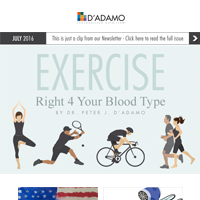
Dr. D’Adamo’s Exercise Recommendations
by Blood Type:
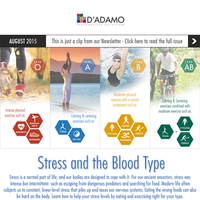
Type O -
Intense physical exercise, such as aerobics, running and martial
arts – at least 30/40 minutes 4 times per week, more when
anxious or under stress.
Type A - Calming, centering exercises such as
Yoga and Tai Chi – 30/40 minutes at least 3 times per week.
Type B -
Moderate physical exercise with a mental component, such as hiking,
cycling, tennis and swimming. – 30/40 minutes 4 times
per week.
Type AB -
Calming, centering exercises such as Yoga, combines with moderate
exercise, such as cycling or tennis – engage in 45/60 minutes
of aerobic exercise at least 2 times per week, balanced by daily
stretching, meditation or yoga.
The results from the first GenoType Boot Camp have been phenomenal! The results from the top 5 participants include overall 22 pounds lost, 17.20 inches lost and a gain in flexibility of 8.25 inches.
After hearing an interview
with Dr. D’Adamo and Dr. Memhet Oz on XM Radio, Renee Nolte immediately
went out and bought The
GenoType Diet. “It totally grabbed my attention. I read the book
in three days.” Renee says. However, this dynamic woman did not simply
start applying the principles to her own life, she took it to a whole new
level - she started a GenoType Boot Camp!
Renee is the founder, chief instructor and owner of two Karate studios in Texas,
Krav Maga Sidekicks studios in Portland and College Station (www.kravmagasidekicks.com).
She is a 4th Degree Black Belt in American Karate, 1st Degree Black Belt in Korean
Tae Kwon Do and has numerous Martial Arts certifications and accreditations.
She has trained groups such as the US Army, Navy, Coast Guard and Border Patrol
and has instructed actor Roger Yuan, known for his roles in Batman and the Lethal
Weapon franchise. She is frequently featured on radio and television as an expert
on martial arts and fitness. Click
here to listen to Renee's GenoType Radio Show.
After reading The GenoType
Diet, she was motivated to inspire others to educate themselves on what
she refers to as, “the perfect wellness plan.” From her experience
in her studios, she knew that people like to see immediate results and knew
that the boot camp model was one way to provide that. “Boot camps get
quick results packed with high energy and constant motivation. I teach martial
arts and I teach people to live in a wellness atmosphere as they learn to
protect themselves. Offering a boot camp made perfect sense.” The
boot camp ran for six weeks, four days per week - on Sunday the participants
trained for one and a half hours and Monday through Wednesday they trained
for one hour each day for a total of four and a half hours per week.
To develop her GenoType Boot camp program, she looked at the exercise guidelines
for each GenoType and found the similarities among them. Yoga and Pilates were
recommended for most of the GenoTypes so they were incorporated into the program
more frequently. Interestingly, she also substituted martial arts for some of
the other recommended exercises. For example, in place of swimming, which Dr.
D'Adamo recommends for Nomads, she substitutes Jujitsu, where Renee says, “You
train in leverage and flow, similar to you against the water.” She also
integrated other Martial Arts training regimens into each class, such as punch,
kick, block and footwork. Renee also developed her own fitness program called
KarateLates which she says went hand-in-hand with this boot camp. “It
is a combination of Pilates and Karate, balancing control, leverage, timing and
application of self-defense.”
When the program was announced, students eagerly signed up. “My students
at every age level were absorbed by the knowledge and couldn’t wait to
discover their GenoType” remarked Renee, “There were only a few skeptics
and hard heads – until I shared about genetics and what (diseases) you
are prone to. There was a transformation of open mindedness and acceptance shortly
after. I didn’t have to deal with any negativity. It’s a simple science,
not a philosophy.”
To determine their GenoTypes, each of the participants was blood typed, measured
and fingerprinted according to the directions in the book. “While some
were reading about GenoType, others were getting measured. It was a comfortable
time and exciting as the students would comment about the foods they would miss
or introduce.” explained Renee. “We also used the GenoTyping Kit,
which was a handy tool.”
The results from the first GenoType Boot Camp have been phenomenal! The results
from the top 5 participants include overall 22 pounds lost, 17.20 inches lost
and a gain in flexibility of 8.25 inches. Renee also remarked that her students
have a renewed sense of pride in their body and the care of their bodies – not
just externally, but internally. She has also observed that her students seem
happier, more energetic and full of life. Renee is particularly proud of one
GenoType Boot Camp student who had been bringing her children in for Karate lessons
for years. During that time, Renee had tried to get her interested in some fitness
classes, but the woman always had an excuse as to why she could not participate.
After the GenoType Boot Camp had been meeting for about two weeks, the woman
saw what was being accomplished and it sparked something in her. “She
was very open to the GenoType concept and had a lot of fun. She lost inches,
gained flexibility, increased her cardio, and learned some Martial Arts skills – she
even got a new haircut and made new friends. Now she’s attending our classes
regularly.” The “biggest loser” was Dr. Jennifer Blasingame,
an OB/GYN, who lost 14 pounds, 7 inches, gained muscle and flexibility.
Renee will be holding two GenoType Boot Camps in August in both her studios and
her students are excited to get started. The GenoType concept is interesting
and people are intrigued. “We recently had a booth at a health fair displaying
our programs and sharing about our work. I brought the GenoType
book and every person who walked by stopped and picked up the book, thereafter
they immediately became interested…the possibilities are limitless.”
GenoType Boot Camp's Biggest Loser Dr. Blasingame
Success Story
As a physician, I tend to have a fairly open mind to all different theories – I understand that there are many ways to achieve goals. I was excited to try something that I had not!
Dr. Jennifer Blasingame signed up for Renee Nolte’s GenoType Boot Camp because she was intrigued by the idea of combining her love of martial arts with the opportunity to develop an individualized eating plan that would be completely in harmony with her body. She was expecting some great workouts, as she had completed a previous martial arts boot camp with Ms. Nolte, but she wasn’t expecting to lose 17lbs. in six weeks and gain so much more energy!
“I have always struggled with my weight and diet.” says the 42 year old OB/GYN, wife and mom. “I felt like I could only take in about 1200 calories to maintain my weight, and not even lose! I was interested to see if I could be more satisfied with eating differently, possibly more appropriately for my GenoType.” Dr. Blasingame had heard of the Blood Type Diet, but had never read the book or studied the theory before attending the boot camp, but she was open to the idea. “As a physician, I tend to have a fairly open mind to all different theories – I understand that there are many ways to achieve goals. I was excited to try something that I had not!”
After reading The GenoType Diet, Dr. Blasingame discovered that she was a Warrior. “I was surprised to find I was a Warrior as I don’t feel like one – I was sure I would be a Teacher or Explorer – but when I read the characteristics I could definitely identify with many of them, especially what seemed like a slow down in my metabolism on entering my forties.” Fortunately, she does not have any serious health issues such as high cholesterol, high blood pressure or diabetes. However, as a peri-menopausal woman she does have concerns about losing bone density and feels that her dietary changes and her weight bearing workouts have contributed to slowing down that process. She adds that she feels great – especially since she takes the GenoType supplements - and has a whole lot more energy and can keep up with her children more easily!
Now that the Boot Camp is over, she says she will “absolutely continue” to follow the Warrior food recommendations, although she says she does miss milk and tomatoes. “Milk was something I never thought I would miss and since I never liked alternatives to milk I was hesitant to try some of the other options listed. I did try the rice milk but it was just too sweet for me. I love yogurt and was able to eat that instead.” She adds that she loves Mediterranean food and enjoyed new beans, like fava beans and new cheeses such as Farmers cheese which she had never tried before. “What was very helpful to me was that Ms. Renee would send out a weekly e-mail newsletter with helpful food and exercise hints for our GenoTypes.” She is also continuing her workouts which include Karate, Armis, Krav Maga (Israeli Street Fighting) and Judo – she also incorporates yoga, Pilates and Ms. Renee’s own brand of exercise, “KarateLates,” which combines Karate and Pilates. “When my son wanted to take Karate last year, I signed up for my first boot camp. That was the very first time I had participated in any martial arts. I was a complete novice! I still feel like it is very new to me, but I wish I had been introduced to martial arts as a child for the fitness, confidence and self esteem it helps you build.”
Dr. Blasingame says that she has enjoyed learning more about foods that are better for her. She believes that, “just cutting calories will not achieve weight loss success as well as eating the appropriate foods.” She feels that she is still a long way off from her ultimate fitness goal. “I will probably never reach my ultimate fitness goal as I am so unfit,” she jokes. “However, the program jump started my fitness program and I am continuing today. I’m trying to attend class at least five times a week. I have a long way to go to be where I should be, but I am certainly a whole lot more fit than when I started!”
Do you have a success story you would like to share from using our products? Would you like to be featured on our website? If so, contact customer service direct at: 1-203-761-0042 and we'll arrange an interview!
Right For Your Type News
Larry Nesbit's Mini Conference: Guest Speaker Dr. Peter J. D'Adamo
Plateau Eat Righters Mini Conference and IfHI Approved
Certification Testing
October, 25, 2008
Tennessee Technology Center
Crossville, TN
Dr. D’Adamo will be the Featured Speaker. Larry is expecting over 200
people to attend and certify. Seating is limited and few spaces are left. If
you are interested in attending the conference, please contact Larry Nesbit at
931-456-9245 or er4yt@frontiernet.net
Dr. D'Adamo's Press Appearances and Lectures
Below is a list of Dr. D’Adamo
press appearances and lectures.
Thursday, September 18 – William Backus Hospital, Norwich, CT – 860 889-8331
Oncology Lecture for cancer patients and survivors www.backushospital.org
Saturday, October 11 – New York Association of Naturopathic Physicians
Annual Conference
Keynote Speaker (geared toward Naturopathic physicians
and allied health professionals) www.nyanp.org